Artificial Intelligence is no longer something we talk about as “the future.”
In 2026, it’s already here.
And more importantly—it’s already inside your games.
From smarter enemies and dynamic levels to personalized offers and AI-generated voices, mobile gaming is evolving faster than ever.
At first, it feels exciting.
Games feel smoother. More responsive. More tailored to you.
But after playing for a while, I started noticing something different.
Something subtle.
👉 The experience didn’t always feel… natural.
And that leads to a bigger question:
👉 Is AI making mobile games better—or quietly changing what made them fun in the first place?
Let’s break it down.
🎮 AI Is Now Designing Your Gameplay
One of the biggest shifts I’ve noticed is how games no longer feel completely fixed.
They adapt.
In many mobile games today, AI is used to:
- Generate levels automatically
- Adjust difficulty in real time
- Personalize rewards
- Create dynamic events
- Modify story progression
At first, this feels amazing.
The game feels like it understands you.
If you struggle, it gets easier.
If you improve, it challenges you more.
👉 It feels personalized.
But here’s the part that made me pause:
If everything is constantly being adjusted…
👉 Are you playing a designed experience—or a controlled one?
Because instead of a fixed game world, you’re interacting with a system that’s reacting to your behavior.
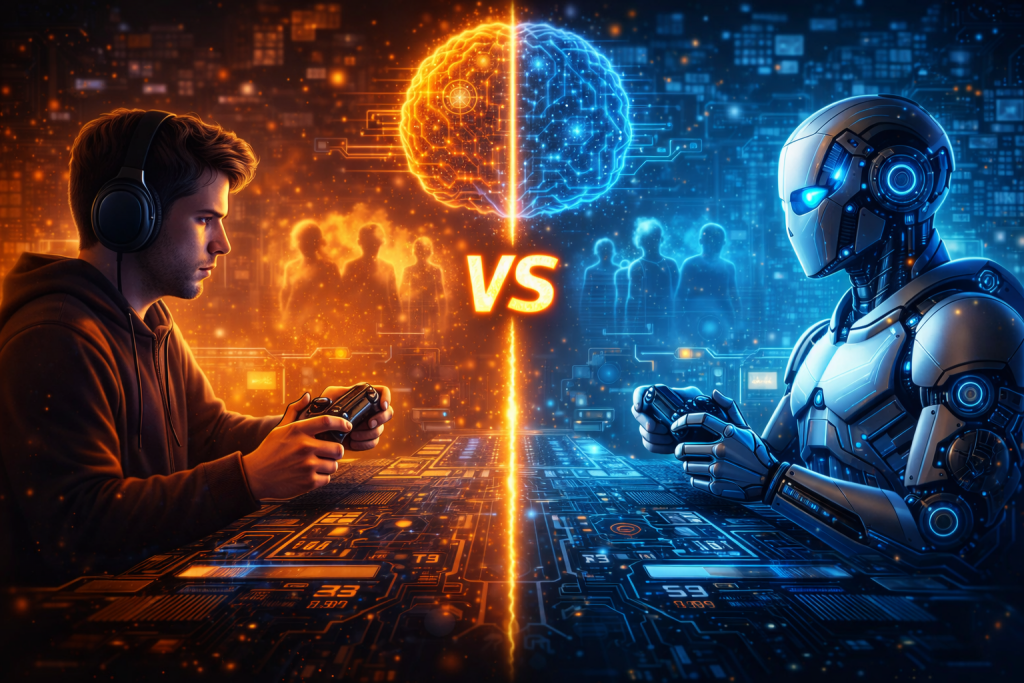
🤖 Are You Really Playing Against Humans?
This is where things get even more interesting.
AI bots in 2026 are not obvious.
They don’t behave like the old bots.
They:
- Miss shots sometimes
- Move unpredictably
- React with slight delays
- Make realistic mistakes
👉 They feel human.
Some games now use AI to:
- Fill empty lobbies
- Balance matches
- Reduce queue times
- Keep gameplay engaging
And honestly?
It works.
Matches start faster. They feel more balanced.
But here’s the thought that stuck with me:
👉 What if that opponent you just beat… wasn’t real?
Would it change how you feel about that win?
For casual play, maybe not.
But for competitive gaming?
That’s a different story.
💰 AI Monetization Is Smarter Than Ever
This is where things start to feel a bit uncomfortable.
Modern AI systems don’t just track gameplay.
They track behavior.
They analyze:
- When you’re most likely to spend
- What items you prefer
- When frustration peaks
- When you’re close to quitting
- How often you engage
And then?
The game responds.
You start seeing:
- Limited-time offers
- “Almost won!” pop-ups
- Personalized bundles
- Discounts at the perfect moment
This isn’t random anymore.
👉 It’s calculated.
From my perspective, it sometimes feels like the game knows exactly when to push you.
And that raises a real question:
👉 Are you choosing to spend—or being guided toward it?
🎨 AI Is Creating the Game Itself
Another big shift is how content is created.
Some games now use AI to:
- Generate character designs
- Create music
- Produce voiceovers
- Design environments
The benefits are clear:
- Faster updates
- Lower costs
- More content
And as a player, you notice this.
Games feel more active. More alive.
But there’s also a downside to think about.
👉 Where does human creativity fit in?
If everything is generated by algorithms…
Is it still creative?
Or just optimized?
🧠 The Side Most People Don’t Talk About
Now to be fair—AI isn’t all negative.
In fact, some of the best improvements in gaming right now come from AI.
I’ve personally noticed:
- Fewer obvious cheaters
- Better matchmaking
- Smoother performance
- Less toxicity in some games
AI is also helping with:
- Accessibility features
- Performance optimization on weaker devices
- More balanced gameplay
👉 When used correctly, AI actually improves the experience.
And that’s important to recognize.
⚖️ So… Is AI Ruining Mobile Gaming?
Honestly?
It depends.
AI itself is not the problem.
👉 It’s how it’s used.
If developers use AI to:
✔ Improve gameplay
✔ Create fair competition
✔ Enhance player experience
✔ Support creativity
Then AI is a massive upgrade.
But if it’s used to:
❌ Manipulate spending
❌ Fake multiplayer experiences
❌ Replace creativity completely
❌ Control player behavior
Then players will notice.
And eventually?
👉 They will push back.
🎯 My Personal Experience With AI in Games
After playing a lot of mobile games recently, I can say this:
Things feel different.
Matches are smoother.
Progression feels more controlled.
Even difficulty feels… managed.
And while that makes games more accessible…
👉 It sometimes feels less organic.
Less unpredictable.
And that unpredictability—that randomness—is part of what made gaming fun in the first place.
💬 Final Thoughts
Mobile gaming in 2026 isn’t just about gameplay anymore.
It’s about systems.
Behind every match, every reward, and every challenge…
👉 There’s an algorithm making decisions.
AI is no longer a feature.
It’s part of the foundation.
And the real question isn’t whether AI belongs in games.
It’s this:
👉 Who is it really serving?
The players?
Or the system behind the game?
Gaming has always evolved.
From arcades to consoles.
From PC to mobile.
From offline to online.
Now we’re entering the AI era.
And how it’s used will define what gaming becomes next.
👉 Want More Insights Like This?
If you enjoyed this, check out my other posts.
I’ll be sharing more about:
Gaming trends
Hidden mechanics
Industry shifts
🎮 Built for real players — no fluff.
Leave a Reply