Mobile gaming in 2026 feels different.
Not louder. Not flashier.
Just… smarter.
If you’ve been playing regularly, you’ve probably noticed it too. Games feel more polished. Progression feels more controlled. Even the way you get hooked into a game feels intentional.
That’s because the industry isn’t chasing novelty anymore.
👉 It’s optimizing everything.
From how long you play… to how often you return… to when you’re most likely to spend.
After spending time playing, testing, and observing trends, one thing is clear:
👉 Mobile gaming is no longer driven by hype. It’s driven by data, retention, and player behavior.
Let’s break down the biggest trends shaping mobile gaming right now.
🎯 1. Retention Matters More Than Downloads
A few years ago, success meant one thing:
👉 Getting as many downloads as possible.
Now?
That’s just the beginning.
In 2026, what really matters is:
- How long players stay
- How often they return
- How much they engage over time
Metrics like:
- Day 7 retention
- Day 30 retention
- Daily active users (DAU)
- Lifetime value (LTV)
have become the real focus.
From my experience, you can feel this shift.
Games are now designed to:
- Hook you quickly
- Keep you engaged early
- Reward you within minutes
👉 The first 10–15 minutes matter more than ever.
If a game doesn’t grab you fast, it loses you.
That’s why onboarding feels smoother now.
Tutorials are shorter. Rewards come faster. Progress feels immediate.
It’s all intentional.
⚡ 2. Short, High-Intensity Sessions Are Taking Over
Mobile players don’t want long sessions anymore.
Most people are playing:
- During breaks
- While commuting
- Between tasks
So games are adapting.
Instead of long gameplay loops, we now see:
👉 Short, focused sessions (10–15 minutes)
👉 Immediate goals
👉 Fast outcomes
From my perspective, this makes games feel more addictive.
You always feel like:
👉 “Just one more round”
And that’s by design.
This trend also matches how people consume content today.
Short videos. Quick interactions. Instant feedback.
👉 Mobile games are following the same pattern.
🔥 3. Live Events Are Now Essential
One thing I’ve noticed clearly:
Games that don’t update often… fade quickly.
In 2026, successful games rely heavily on live operations (live-ops).
This includes:
- Weekly events
- Limited-time challenges
- Seasonal content
- Rotating leaderboards
These updates keep the game feeling fresh.
Even if the core gameplay stays the same, the experience changes regularly.
👉 That’s what keeps players coming back.
From a player perspective, it creates urgency.
You don’t want to miss:
- Limited rewards
- Special events
- Exclusive content
And that constant cycle keeps engagement high.
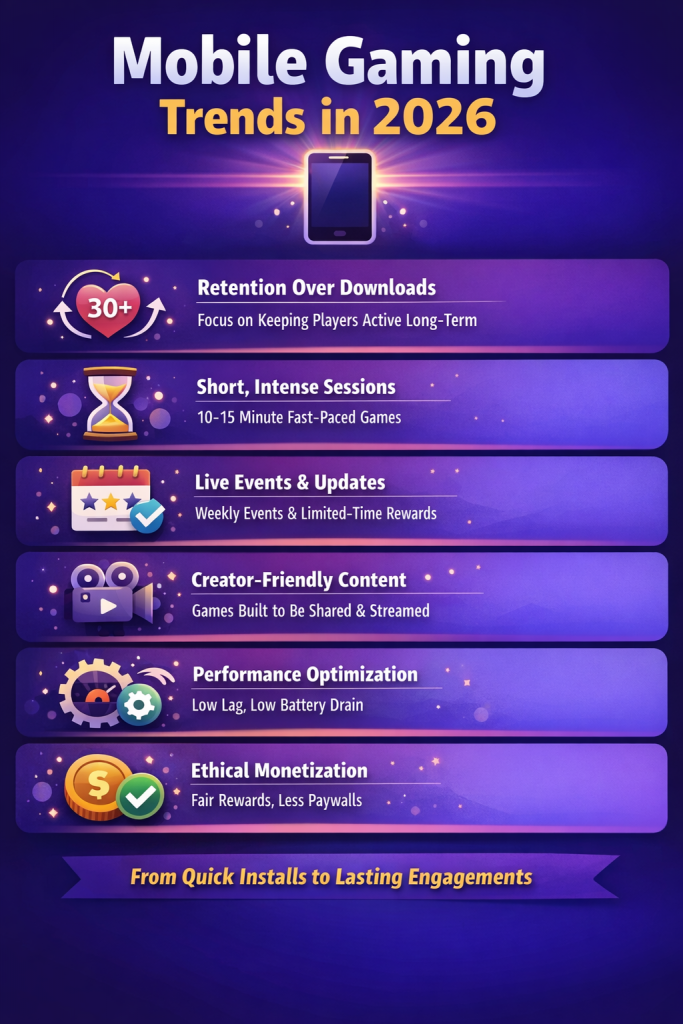
📹 4. Games Are Being Built for Content Creation
This is one of the biggest changes I’ve seen.
Games are no longer just designed to be played.
👉 They’re designed to be shared.
Developers are now thinking about:
- How the game looks in clips
- How moments can go viral
- How exciting it is to watch
That means more:
- Dramatic gameplay moments
- Skill-based highlights
- Unexpected outcomes
Because those moments spread on platforms like:
- TikTok
- YouTube Shorts
- Instagram Reels
From my experience, this works.
I’ve seen games grow just because one clip went viral.
👉 Game design and content creation are now connected.
⚙️ 5. Performance Matters More Than Ever
Players are less forgiving now.
If a game:
- Lags
- Drains battery
- Overheats your phone
👉 People leave immediately.
In 2026, performance is a huge factor.
Good games are:
- Lightweight
- Smooth
- Optimized for different devices
Even small issues can lead to negative reviews.
And those reviews directly impact downloads.
From my experience, I’ve dropped games quickly just because they didn’t feel smooth.
👉 Performance is no longer optional—it’s expected.
💰 6. Players Are More Aware of Monetization
This is a big shift.
Players are no longer blind to monetization strategies.
They notice:
- Paywalls
- Aggressive ads
- Unfair advantages
And they react.
Games that succeed long-term are now:
👉 More transparent
👉 More balanced
👉 More respectful of player time
From my perspective, this is a positive change.
Players are starting to value:
- Fair progression
- Honest rewards
- Real value
And games that ignore this?
👉 They lose trust quickly.
🧠 My Personal Take on These Changes
After playing a lot of mobile games recently, one thing stands out:
Everything feels more calculated.
Not in a bad way—but definitely more intentional.
From:
- How rewards are given
- How difficulty scales
- How often you return
👉 It all feels designed.
And that’s because it is.
Games are now built using data, not just creativity.
🎯 Final Thoughts
Mobile gaming in 2026 isn’t just evolving—it’s maturing.
Success is no longer about:
- Big graphics
- Heavy marketing
- Following trends
It’s about:
- Understanding player behavior
- Keeping players engaged
- Respecting player time
The best games today are the ones that:
- Feel smooth
- Stay interesting
- Reward you consistently
👉 And most importantly—make you want to come back.
Because at the end of the day, that’s what matters.
Not downloads.
Not hype.
👉 But whether you keep playing.
👉 Want More Insights Like This?
If you found this helpful, check out my other posts.
I’ll be sharing more about:
Gaming trends
Hidden systems
What actually works in modern games
🎮 Built for real players — no fluff.


Leave a Reply