Every year, thousands of mobile games are released on app stores. Most of them quietly disappear without gaining much attention.
But every once in a while, something different happens.
A mobile game suddenly explodes in popularity. Within days or weeks, millions of players download it, streamers start playing it, and social media fills with clips, challenges, and discussions.
To many people, it looks like these games became popular purely by luck.
But in reality, viral mobile games rarely succeed by accident.
Behind almost every overnight success lies a powerful combination of psychology, design strategy, and social dynamics.
Let’s break down why some mobile games suddenly take over the internet.
🎯 1. Simplicity Makes Games Shareable
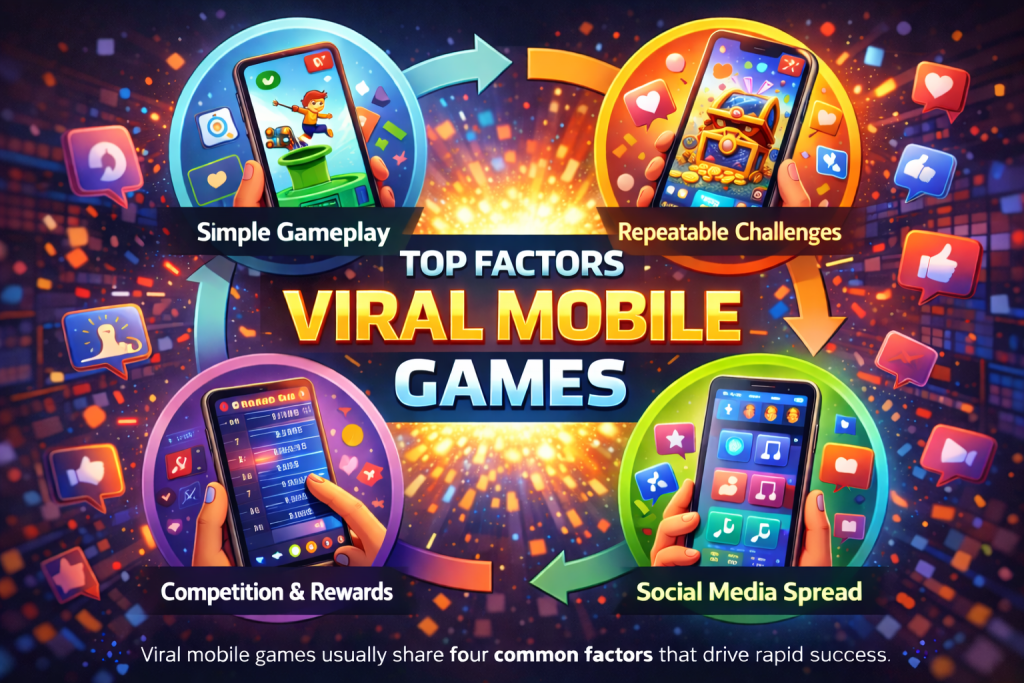
The most successful viral mobile games are extremely simple to understand.
Think about games like:
- Flappy Bird
- Subway Surfers
- Among Us
- Temple Run
You can explain the gameplay in just a few seconds.
Tap to jump.
Avoid obstacles.
Survive longer than your friends.
When a game is easy to understand instantly, it becomes much easier for players to share it with others. Someone can watch a short clip online and immediately understand what is happening.
Complex games can be fun too, but simplicity dramatically increases the chances of going viral.
The easier it is to explain, the easier it is to spread.
🧠 2. The Psychology of “Just One More Try”
Many viral mobile games are designed around a very specific psychological loop.
Players fail quickly but feel like they were very close to succeeding.
This creates a powerful mental reaction.
The brain tells us:
“You almost did it. Try again.”
This near-miss effect is one of the most powerful engagement mechanisms in gaming.
Games that trigger this feeling encourage players to keep trying again and again.
Each attempt is short, but the desire to improve keeps players coming back.
When a game becomes difficult to stop playing, players naturally talk about it with friends.
And that is how virality begins.
📱 3. Short Gameplay Fits Modern Life
Mobile games succeed when they fit into small moments of everyday life.
People often play mobile games while:
- waiting for the bus
- sitting in a waiting room
- taking a break at work
- relaxing before sleep
Games that can be played in 30 seconds to 2 minutes are perfect for these situations.
Short sessions make the game feel accessible and flexible.
This also increases the number of times players open the game each day.
More sessions lead to more engagement, and more engagement increases the chances of a game spreading quickly.
🔥 4. Social Media Is the Real Accelerator
In the past, games became popular through word of mouth.
Today, social media can amplify a game’s popularity almost instantly.
Platforms like:
- TikTok
- YouTube Shorts
- Instagram Reels
- Twitch
allow short gameplay clips to reach millions of viewers.
A funny moment, a lucky win, or a surprising gameplay mechanic can quickly turn into viral content.
Once creators begin posting gameplay clips, curiosity grows.
Viewers start asking:
“What game is this?”
Downloads start increasing, and the viral cycle accelerates.
Many games today are intentionally designed with moments that are highly shareable on social media.
🎮 5. Competitive Elements Make Games Spread Faster
Another common trait of viral mobile games is competition.
Games that allow players to compare scores naturally encourage sharing.
Leaderboards, high scores, and ranked modes push players to challenge their friends.
A player who achieves a new high score might post it online or send it to friends.
Suddenly, the game becomes more than just entertainment.
It becomes a challenge.
Competition is a powerful motivator, and it often helps games spread across social groups.
🎨 6. Visual Identity Matters
A game’s visual style can also influence how quickly it spreads.
Bright colors, unique characters, and memorable designs help a game stand out in crowded app stores.
When people see screenshots or gameplay clips, the visuals should instantly catch attention.
Many viral games also use clear, colorful animations that are easy to recognize even in short clips.
This makes them ideal for social media.
🚀 7. Timing and Luck Still Play a Role
Even with great design and marketing, timing still matters.
Sometimes a game becomes viral simply because it appears at the right moment.
Maybe a popular streamer discovers it.
Maybe a viral TikTok clip suddenly reaches millions of viewers.
Or maybe players are simply ready for a new type of experience.
While strategy increases the chances of success, virality always contains an element of unpredictability.
⚡ The Bigger Picture
The success of viral mobile games shows that modern gaming is about more than just gameplay mechanics.
Psychology, social sharing, and accessibility all play major roles in determining whether a game succeeds or disappears.
Developers who understand these dynamics can design experiences that naturally encourage players to engage, share, and compete.
And when all these factors align, something remarkable happens.
A simple mobile game can suddenly capture the attention of millions of players around the world.
Almost overnight.
🎯 Final Thought
Viral mobile games might appear to succeed by chance, but the reality is far more complex.
Behind every overnight sensation lies a combination of smart design, player psychology, and social momentum.
The next time you see a mobile game suddenly trending everywhere, remember that its success may not be random.
It might simply be a perfect example of how modern games are built to spread.
👉 Want More Guides Like This?
If you found this helpful, check out my other posts on the site.
I’ll be sharing more:
Gaming insights
Strategy breakdowns
Content growth tips
🎮 Built for real players and creators — no fluff.
Leave a Reply